
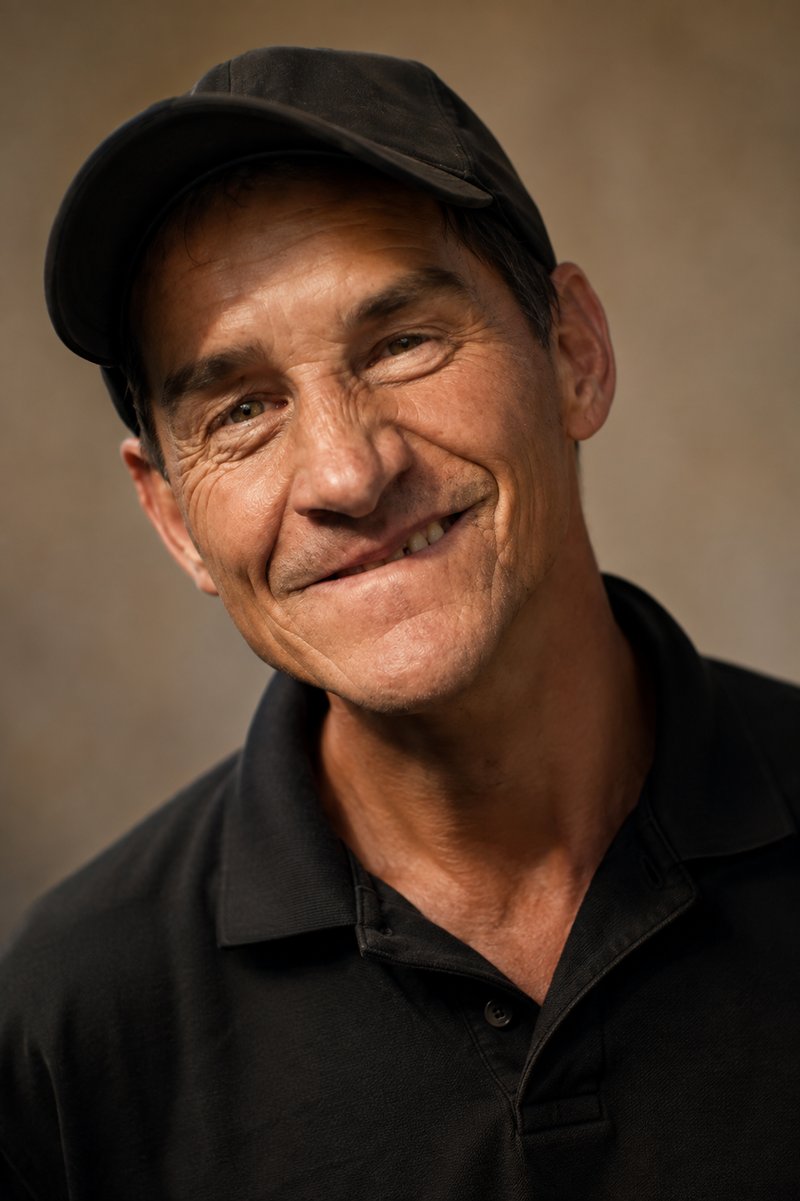
A Golfer Who Teaches
In 1994, a local newspaper ran a headline about Marty Turcios: “Golfer not only plays, he teaches.” The headline reflected an assumption Marty had encountered for years: that because he had cerebral palsy and difficulty with speech and mobility, people did not always expect him to be able to play golf. By then, he had been teaching the game since he was a student himself.
Learning the Game
Marty began teaching himself to play golf when he was six. As he learned the swing, he paid close attention to balance, weight shift, and how his body produced power. Golf also gave him something he could practice and improve largely on his own. Those early experiences later influenced how he thought about golf, disability, and recreation.
School and Education
Marty’s parents were told that he was unlikely to succeed academically and were advised to place him in one of the lower-performing high schools in his district. He later earned a bachelor’s degree and then a master’s degree in Therapeutic Recreation from San Jose State University. While he was in graduate school, a professor encouraged him to continue in the field and helped him see therapeutic recreation as a professional path.
Becoming a Golf Instructor
After college, a teaching position Marty expected did not work out as he had hoped. For a time, he was unsure what he would do next and spent a great deal of time practicing at the driving range. He later received an offer to teach golf at Fremont Adult School in California.
Some of his students initially questioned whether someone who had difficulty walking and speaking could teach them golf. Marty taught the seven-week course by focusing on the fundamentals of the game and working directly with each student. The experience became an important part of his development as an instructor.
Therapeutic Golf
Marty teaches the fundamentals of golf: grip, stance, swing mechanics, practice, and course play; but his instruction also includes what a person needs to participate outside a lesson. That can include booking a tee time, arranging transportation, understanding course etiquette, and using adaptive equipment when needed.
On-course outings give participants a chance to use what they have practiced in clinics in an actual round of golf. Marty describes golf as a bridge between therapy and recreation outside the clinical setting. His emphasis is on helping people become more self-directed in how they practice, play, and make recreation part of their lives. That idea also became central to his graduate work on self-directed leisure and self-actualization.
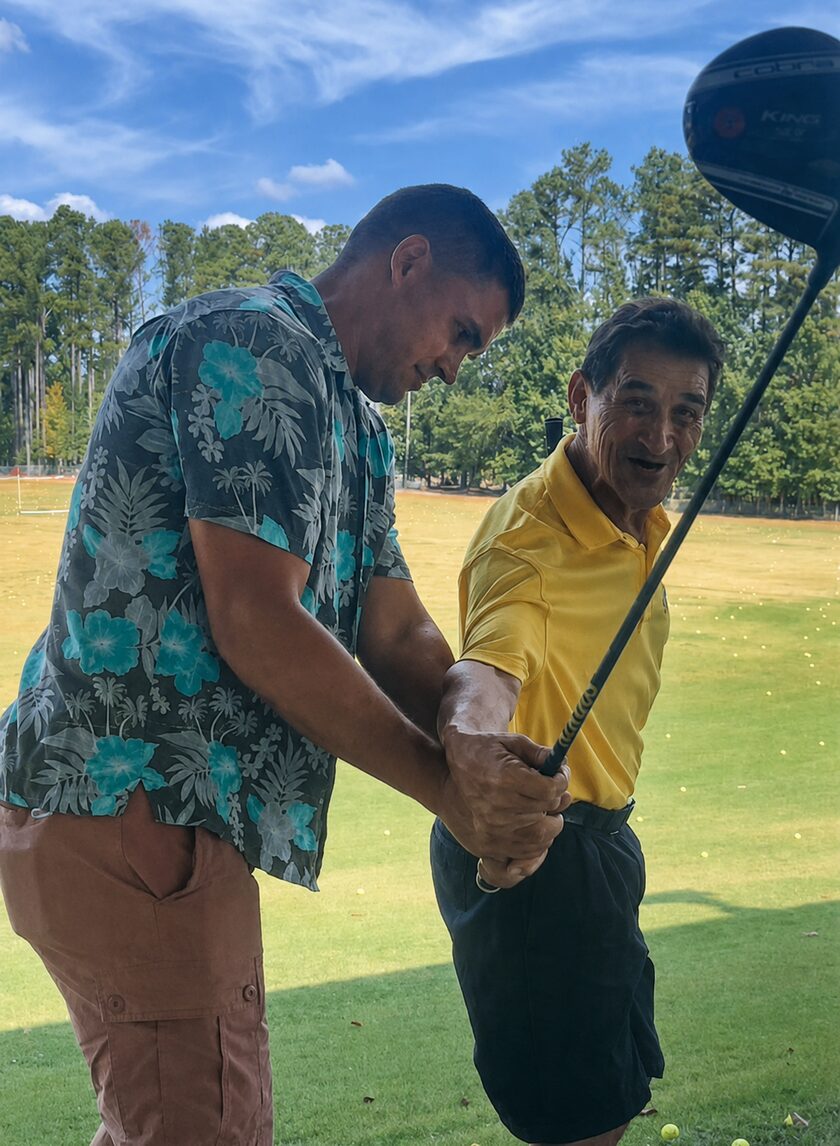
Marty adjusts his instruction to what each participant can do.
In 1989, a letter Marty wrote about his work reached Arnold Palmer through the USGA. Palmer wrote back personally, congratulating him and calling it "gratifying to hear from persons who derive great enjoyment from golf by overcoming handicaps."
A Letter from Arnold Palmer
Founding MTTG
In 2010, Marty founded Marty Turcios Therapeutic Golf (MTTG), a 501(c)(3) nonprofit, to continue this work through therapeutic recreation. Early programs in California included autistic teens and adults, veterans recovering from traumatic brain injury, and other people living with disabilities. Some participants went on to compete in Special Olympics golf.
Those programs also gave Marty years of experience adjusting golf instruction for people with different movement, communication, and support needs.
MTTG in Augusta
In 2016, Marty brought MTTG to Augusta, Georgia. Since then, MTTG has conducted adaptive and therapeutic golf programs across the CSRA and developed working relationships with healthcare providers, rehabilitation programs, golf organizations, and universities.
Some of those organizations connect participants with MTTG or support them during clinics. Others provide places to practice and play, professional collaboration, or opportunities for students to learn through the programs.
Marty teaches each participant based on what they can do, how they move, and what they are comfortable working on. Instruction is adjusted to the individual rather than using the same approach for everyone.